


wePix arena
GIRY
Turning a group of phones into one shared visual experience sounds simple, but it only works when everyone follows the same rhythm. That is the idea behind wePix arena, an events app from GIRY that treats smartphones as parts of a larger screen. I found it most interesting in situations where a crowd is already gathered and wants to participate together, rather than when someone is looking for a private utility on their own phone.
The app is free and aimed at Everyone, which makes it easy to consider for family gatherings, school activities, public events, fan moments, or any occasion where a coordinated display can add atmosphere. Its short store description, “wePix arena,” is brief, so the useful question is not what the slogan sounds like, but how the experience fits into a real event. My view is that the app succeeds when preparation is treated as part of the activity. It is less convincing if you expect it to behave like a complete event platform with extensive planning tools.
How I would use wePix arena at a real event
My preferred starting point is to decide what the crowd is supposed to see before asking everyone to install or open anything. A simple visual instruction works better than a complicated plan: hold phones in a particular orientation, keep brightness consistent, and follow the same timing cue. The app’s concept depends on many small screens being viewed as one surface, so individual habits that are harmless elsewhere can become distracting here.
For example, imagine a community presentation where the audience is seated in rows. The organizer can explain the purpose in one sentence, give people a moment to prepare their phones, and then start the coordinated display when most participants are ready. I would avoid launching it during the most important spoken part of the program. People naturally look down while joining, and that brief loss of attention can interrupt the event if the timing is poor.
That is one of the first practical lessons with this kind of app: the crowd-management plan matters as much as the screen effect. I would assign one person to give the start cue and another to watch the audience. If several people are still setting up, waiting a little is better than beginning with a patchy pattern of inactive screens.
Related News

Instagram Is No Longer a Photo App. It Is an Attention Engine
Microsoft Teams Mobile: When Collaboration Becomes Navigation
How the NFL App Adapts to Android and iOS Updates

Temu: Elevate Your Shopping Experience to Billionaire Status
Why Traffic Rider Works Best as a Precision Reflex Game
How Google’s Find Hub Transforms Everyday Searches
The baseline workflow is straightforward. Install the app, open it before the coordinated moment, check that the phone is ready to display, and keep it in the agreed position. Participants should not need to make creative decisions at the last second. A short rehearsal is especially useful for organizers because it reveals whether the seating arrangement, lighting, and phone handling make the visual result easy to understand.
I would also tell participants not to lock their phones, switch to another app, or place them face down once the sequence begins. Those actions are obvious, but they are common sources of gaps in a group display. The app is strongest when everyone treats their handset as a temporary tile in a shared arrangement instead of as an individual device.
The settings I would check before inviting a crowd
Because the experience relies on visibility, I would begin with the phone’s own display settings rather than assuming the app can solve every problem. Check brightness, automatic screen timeout, orientation, and any battery-saving behavior that might dim or interrupt the display. These are not glamorous adjustments, but they have a direct effect on whether the group image looks coherent.
Gallery
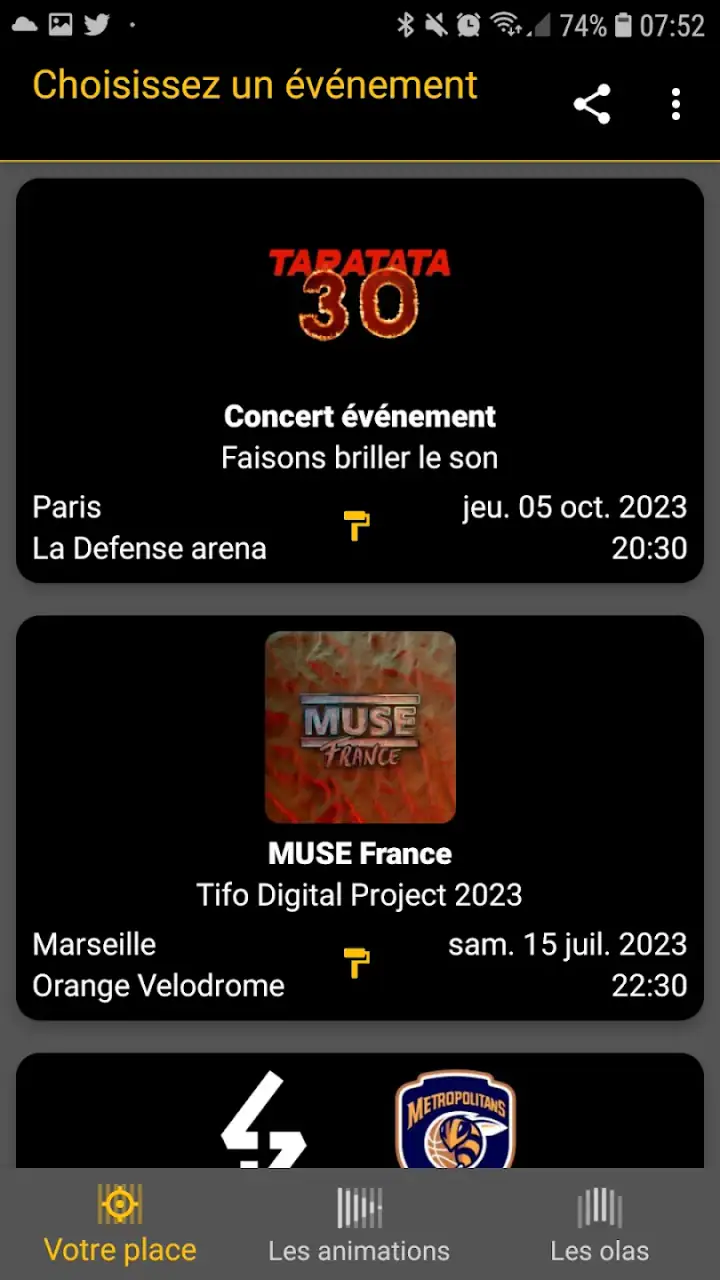
Brightness deserves particular attention in mixed environments. A phone used outdoors may need a different setting from one in a dark hall, and automatic brightness can make neighboring screens look uneven. I would not ask everyone to use the maximum level by default, since that can be uncomfortable and may drain batteries faster. Instead, I would choose a level that remains visible from the audience’s viewing distance and test it in the actual venue.
Screen timeout is another easy detail to overlook. If a participant’s display goes dark halfway through the activity, the resulting gap is more noticeable than it would be during ordinary phone use. Before the event, I would keep the phone awake long enough for the planned sequence and remind people to avoid touching the power button once everything is ready.
Orientation should be agreed on in advance. A mixture of portrait and landscape positions can make a coordinated display look untidy, even when every participant has joined correctly. If the event uses rows of people, I would demonstrate the position with one phone and ask everyone to copy it. A visual instruction is more reliable than a long verbal explanation.
Notification behavior is worth considering too. Incoming messages, calls, or alerts can pull attention away from the activity and may change what participants see. I would encourage attendees to use a suitable focus or silent mode when appropriate, while remembering that this is a personal phone setting rather than something I would attribute to the app itself. The sensible approach is to prepare the device before opening wePix arena.
Compatibility also deserves a quick check. The app supports Android devices running version 5.0 or later, so an older handset may not be suitable even if it still works for everyday tasks. If I were organizing a large group, I would test a few different phones rather than relying on one recent model. That small check can prevent confusion when people arrive with very different devices.
The current version is 3.9.2, and I would encourage participants to update before the event rather than waiting until the last minute. Updates can take time, require a restart, or expose a forgotten account or store issue. Preparing devices earlier keeps the actual gathering focused on the shared display instead of troubleshooting individual phones.
Repeatable habits that make the experience smoother
Experienced users will get more from wePix arena by turning preparation into a repeatable routine. I would create a short checklist: charge the phone, adjust brightness, set the orientation, silence distractions, open the app, and wait for the start signal. The value of this routine is not sophistication; it reduces the number of small decisions people make while the event is already underway.
For a recurring event, I would use the same explanation every time. Tell newcomers where to stand or sit, show the correct phone position, explain when to begin, and identify the person giving the cue. Consistency makes the app feel more dependable because participants know what to expect even if they have never used it before.
A useful shortcut is to prepare a small demonstration group first. Three or four people can confirm the intended orientation and timing before the rest of the audience joins. This is more efficient than discovering a problem after everyone has opened the app. It also gives the organizer a chance to decide whether the effect is visible from the back of the room.
I would keep the first use deliberately simple. A short, clearly timed display is easier to coordinate than an ambitious sequence that asks the audience to change positions or react repeatedly. Once the group understands the basic flow, the organizer can decide whether a longer presentation adds value. If people are constantly looking down to follow instructions, the app is starting to compete with the event instead of supporting it.
Another practical habit is to separate setup from performance. Ask people to prepare their phones while the host is speaking about logistics, then begin only after the explanation is finished. This prevents the common problem of participants missing the instruction because they are already focused on their screens.
For families, I would pair younger users with an adult or older child during the first attempt. The concept is easy to understand, but children may tap buttons, rotate the phone, or leave the display unexpectedly. A buddy system keeps the activity inclusive without turning the organizer into a full-time help desk.
At a school or community event, I would also plan for people who do not want to participate. The display should still work as an optional activity, not as a demand that everyone hand over attention or phone space. This is an important social trade-off: the app can create a memorable group moment, but only when participation feels simple and voluntary.
Where it fits better than ordinary event alternatives
The usual alternatives are printed signs, synchronized lights, a projected image, or a dedicated large screen. Each has a different advantage. A projector gives everyone the same large image, while printed signs are cheap and require no battery. A phone-based display is more personal and can involve many people directly, which is where wePix arena has its clearest appeal.
I would choose it when the audience already has phones available and the goal is participation rather than maximum image quality. It can turn a passive crowd into part of the visual moment. That makes it suitable for a small celebration, a coordinated audience gesture, or an event where the shared act matters as much as the picture.
I would choose a projector instead when the content needs to be read from a distance, when the venue is large, or when the organizer needs precise control over one central image. I would choose printed materials when the activity must remain available for a long time without setup. I would choose lighting equipment when brightness, color consistency, and professional timing are more important than using personal phones.
There is also a privacy and comfort consideration. Some attendees may not want to use their own device in a public activity, may have a low battery, or may simply prefer watching. A dedicated screen avoids that pressure. In my experience, the best use of wePix arena is not as a universal replacement, but as a lightweight option for a group that is already comfortable using phones together.
The app’s event category is a good fit because its value appears during a shared occasion rather than during solitary daily use. I would not install it expecting a calendar, ticketing system, chat community, or a complete event-management workspace. Those are different jobs. Its role is narrower and more visual: help phones contribute to one coordinated moment.
Limits that organizers should understand
The biggest limitation is coordination. No app can make a crowd behave like a single screen if participants start at different times, hold devices differently, or leave halfway through. That means the organizer has to provide clear instructions and choose a moment when people can pay attention. The more casual the crowd, the more modest the expected result should be.
Battery life is another real-world concern. A display-heavy activity can be demanding, especially on older phones or devices that arrive nearly empty. I would ask participants to charge in advance and avoid planning a long sequence without a reason. If the event already involves photography, navigation, or messaging, the phone may need to remain available for those tasks afterward.
Mixed hardware can also affect the visual result. Different screens vary in size, brightness, color, and viewing angle. From close up, those differences may be obvious. From farther away, the combined effect may matter more than the individual variation, but I would still test the arrangement in the venue rather than promising a perfectly uniform wall.
Connectivity and access conditions should be checked before the crowd arrives. I would not assume that every venue provides the same network experience or that every participant can complete setup instantly. A small trial with the actual location and a few representative phones is a sensible safeguard. If the event cannot tolerate a short technical delay, a simpler alternative may be safer.
There is also a social limit: phones can distract people from the occasion. If the audience is meant to watch a speaker, support a performer, or interact face to face, a phone-based activity should have a clear beginning and end. I would avoid leaving it running in the background just because it is available. The strongest effect comes from a deliberate shared moment, not constant screen use.
These limits do not make the app ineffective. They define the conditions where it makes sense. wePix arena is a coordination tool, not a substitute for event planning. Treating it that way leads to better results and more realistic expectations.
Who should try it and who should skip it
I would recommend trying it if you organize gatherings where audience participation matters and where most people can prepare their phones without much difficulty. It is particularly appealing for someone who wants a visual group activity without bringing specialized display equipment. The free price also lowers the barrier for a first experiment, especially when the organizer wants to test the idea before committing to anything more elaborate.
It is also a reasonable choice for families and informal groups. The concept can be explained quickly, and the shared result gives people a reason to cooperate. The app’s Everyone content rating supports that broad audience, although adults should still help younger children handle their devices during setup.
I would skip it for events that demand guaranteed uniformity, precise professional timing, or a large, readable central presentation. I would also skip it if the audience is unlikely to follow instructions or if many attendees will need their phones continuously for work, safety, navigation, or recording. In those situations, a projector, printed material, or event lighting may be a better fit.
The app has reached over one hundred thousand installs, which suggests that the concept has found an audience beyond a single small experiment. I would still judge it by the needs of the individual event rather than by its reach. A popular idea can remain the wrong tool for a venue with strict technical requirements.
My verdict after looking at the complete workflow
What I like about wePix arena is its focused idea. It does not need to pretend to be an all-purpose event suite. When a group is prepared, the app gives ordinary phones a shared purpose and can make participants feel involved in the visual result. That is a more memorable use of a handset than simply asking everyone to record the same moment.
What holds it back is the amount of responsibility placed on the organizer. The experience depends on brightness, orientation, timing, battery, attention, and venue conditions. None of those problems is difficult alone, but together they mean that opening the app is only the middle of the process. A quick rehearsal and a clear start cue are more valuable than complicated improvisation.
GIRY’s app is free, runs on Android from version 5.0 onward, and is currently at version 3.9.2. Those details make it accessible to a broad range of Android users, but I would still test the actual phones involved because an older supported device may behave differently from a newer one in brightness or battery endurance.
My final recommendation is conditional but positive: use it when the event itself can provide the coordination. Prepare devices early, keep the first sequence short, and treat participation as optional. If you follow those habits, wePix arena can add a distinctive group moment without requiring dedicated equipment. If you need a flawless, centrally controlled display, choose a conventional event solution instead. For the right crowd, though, turning many personal screens into one shared visual is a clever and approachable idea.
FAQs for wePix arena
What is wePix arena and how does it work?
wePix arena is a casual mobile gaming experience centered on quick, competitive challenges. After launching the app, players can explore available game modes, learn the basic controls, and compete for higher scores or better rankings. Its short-session format makes it suitable for playing during breaks, while the competitive elements encourage users to return and improve their performance over time.
Is wePix arena free to download and play?
wePix arena can generally be downloaded without an upfront purchase, allowing users to try the main experience before committing financially. However, availability of optional purchases, advertisements, premium content, or other paid features may depend on the version installed and the user’s platform. It is recommended to review the store listing and in-app purchase details before downloading or making any transaction.
Does wePix arena require an internet connection?
The connection requirements may vary depending on which features you use. Basic menus or certain individual activities may work without a constant connection, but online competitions, score synchronization, events, updates, and other connected features can require internet access. For the most reliable experience, use a stable Wi-Fi or mobile-data connection and allow the app to download updates when needed.
Is wePix arena suitable for children?
Parents should check the official age rating and privacy information for wePix arena before allowing children to use it. Besides gameplay, the app may include advertising, online functionality, rankings, social features, or optional purchases. Reviewing the permissions and store description is especially important, and parental controls should be enabled if younger players will have access to purchases or communication-related features.
What should I check before downloading wePix arena?
Before installing wePix arena, verify that your Android or iOS device meets the required operating-system version and has enough free storage for the app and future updates. Also check the developer information, recent user reviews, privacy policy, permissions, connection requirements, and in-app purchase details. These checks can help you avoid compatibility problems and understand how your data and spending may be handled.
Pros
- Simple interface makes it easy to browse and join available activities.
- Arena-style format can make participation feel more engaging and competitive.
- Useful for discovering local events
- matches
- or community activities.
- Mobile access lets users check updates without relying on a desktop browser.
- Can help organizers and participants stay connected in one dedicated platform.
Cons
- The app may have limited value if few activities are available in your area.
- Some features may depend on active organizers and regular community participation.
- New users could need time to understand the platform’s arena-based structure.
- Notifications may become distracting when multiple events or updates are active.
- Availability and content can vary considerably between regions or communities.


